
RC Alcohol Detector
- One RC Alcohol Detector unit
- Sample tubes
- Calibration spreadsheet access
- Email, phone, and WhatsApp support
- One-year warranty
Ships within two business days.
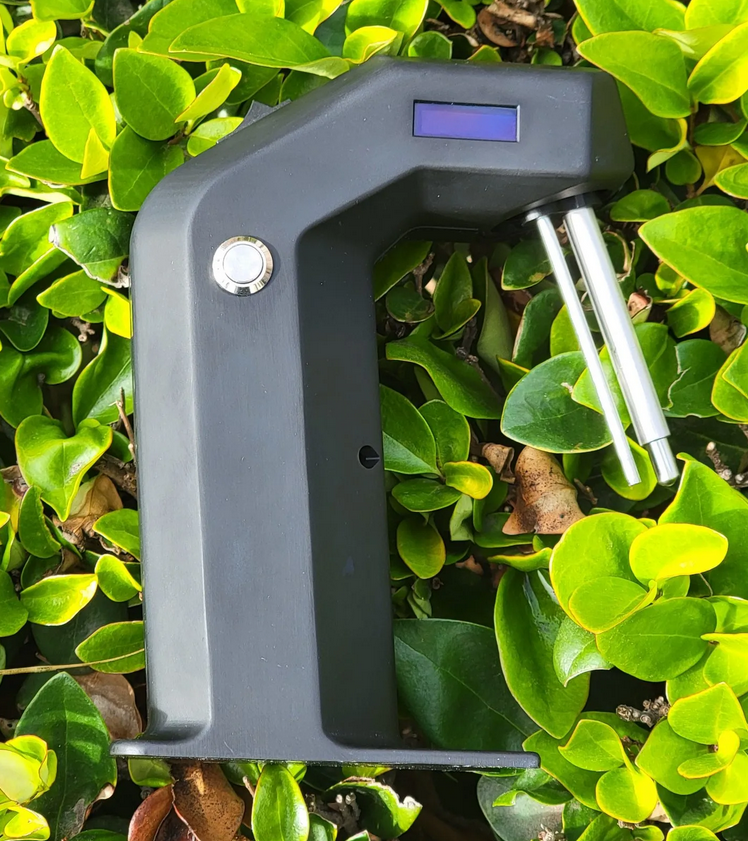
Direct Alcohol Measurement for Kombucha and Low-ABV Beverages
The RC Alcohol Detector, made by Rare Combinations LLC, is an on-site ethanol testing instrument purpose-built for kombucha and other low-ABV fermented beverages. Unlike a density meter, it measures ethanol directly from the vapor above your sample, not from the liquid itself. Carbonation, organic acids, yeast, and sediment do not interfere with the reading. You get actual alcohol content, not an estimate derived from gravity change.
Meet the Competition
Shopping around? Most brewers choose between three options: density meters, commercial lab testing, or nothing at all. Here is how we compare.
| RC Detector | Density Meter | Lab Testing | |
|---|---|---|---|
| Cost | $ | $-$$$$ | $$ per test |
| Accuracy | +/- 0.03%* | +/- 0.1-0.2% | +/- 0.01% |
| Speed | Under 1 min | 5-10 min | Days |
| Works with kombucha | Yes | Inconsistent | Yes |
| On-site testing | Yes | Yes | No |
Density meters measure gravity, not alcohol. They are not designed for kombucha and lose accuracy when fermentation is still active. Lab testing is accurate, but it costs money and takes time you do not always have. The RC Detector gives you lab-quality spot-checking at a fraction of the cost.
Request a QuoteDon't take our word for it.
In 2020, Beyers Analytical was contracted to independently compare the RC Detector against a GC-FID instrument. GC-FID is the gold standard for alcohol measurement in the beverage industry. The data is below.
| Sample | GC-FID | RC Detector |
|---|---|---|
| Kombucha 1 | 0.35 +/- 0.01% | 0.32 +/- 0.05% |
| Kombucha 2 | 0.82 +/- 0.01% | 0.76 +/- 0.05% |
| Kombucha 3 | 0.60 +/- 0.01% | 0.54 +/- 0.05% |
| Kombucha 4 | 0.86 +/- 0.01% | 0.76 +/- 0.05% |
| Kombucha 5 | 0.16 +/- 0.01% | 0.14 +/- 0.05% |
| 0.75% Standard | 0.74 +/- 0.01% | 0.77 +/- 0.05% |
"The Kombucha Alcohol Detector can be a powerful tool for spot-checking alcohol concentration in kombucha products."
Kind words from customers
"We currently use a local lab that uses gas chromatology. They are a public-school funded lab, so it's affordable, but we still have to deal with freezing and overnighting samples, waiting, etc. and while affordable compared to private labs, is not free. Having an accurate in-house method would be the holy grail for any kombucha brewer…"
"I was able to reduce the alcohol content of my recent batch down to 0.55% because I now had an accurate way to test alcohol content. I am working to knock it down a little bit more, but I know without your device there is no way I would be within regulations."
Common Questions
- Does carbonation or sediment affect the reading?
- No. The RC Detector strips ethanol into vapor before measuring it, so nothing in the liquid affects the result. Carbonation, organic acids, yeast, and sediment all stay behind in the sample tube.
- How does it compare to a GC-FID lab test?
- In independent testing by Beyers Analytical, contracted by Kombucha Brewers International, the RC Detector produced results nearly identical to GC-FID across six kombucha samples. Typical accuracy is +/- 0.03% ABV in the 0.1% to 0.5% range.
- What is the TTB 0.5% ABV limit for kombucha?
- The Alcohol and Tobacco Tax and Trade Bureau (TTB) classifies any beverage over 0.5% ABV as an alcoholic beverage, which triggers excise taxes and licensing requirements. Kombucha producers typically stay under this threshold and verify it through formal laboratory testing.
- Can it replace formal lab testing for TTB compliance?
- No. The RC Detector is designed for spot-checking throughout fermentation, not for regulatory submissions. TTB compliance requires certified laboratory testing. Use the RC Detector to monitor batches daily and catch a runaway fermentation before your lab sample goes out.
- Does it work for beverages other than kombucha?
- Yes. Any liquid fermentation can be measured: jun, water kefir, tepache, shrubs, or any low-ABV beverage. The sensor measures ethanol vapor, so only alcohol concentration matters.
- How long does calibration take?
- Calibration with three standards takes about 3 minutes. You can perform a more thorough calibration that takes 10 minutes. Calibration should be performed at least twice a month, but every use is best.
Ready to Purchase?
Free worldwide shipping. One-year warranty. Ships within two business days.
* Accuracy of +/- 0.03% applies to measurements in the 0.1% to 0.5% ABV range.